

The best time of year
to apply for a job (by industry)
8 Minutes read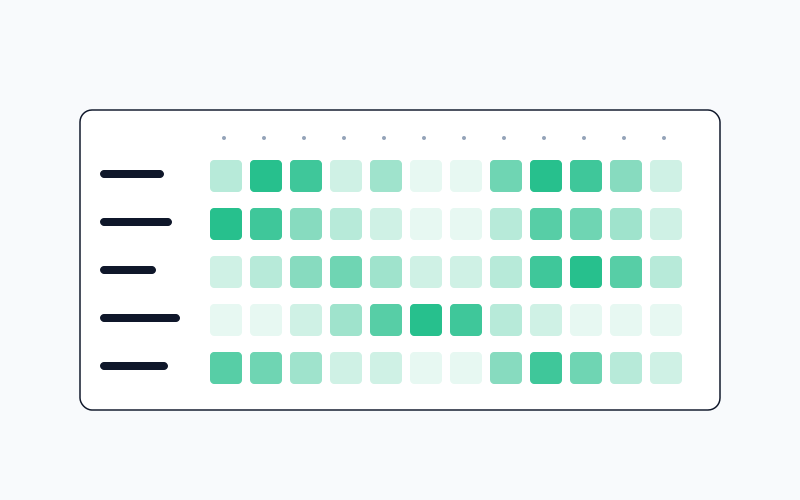
Hiring isn't flat across the year. There are genuinely better and worse weeks to submit applications, and the best ones differ by industry.
"When should I apply?" is one of the most-asked questions in job-searching and one of the most under-answered. Most advice either says it doesn't matter (it does) or claims January is best (it is, and also isn't, depending on what you do).
Hiring is not flat across the year. It has real rhythms, driven by budgets, board meetings, school years, retail calendars, and tax cycles. The rhythms differ by industry but they're consistent year-over-year within an industry. Knowing them is a small-but-real edge: you can time your most important applications for weeks when more roles are open, more recruiters are engaged, and more decisions are getting made.
This is a walk through the real cycle, by major industry, with some honest caveats about where timing actually matters and where it's noise.
The macro pattern
Before the by-industry details, the headlines that apply to most hiring:
- January through mid-March is the biggest hiring window of the year in almost every knowledge-work sector. New fiscal-year budgets activate, headcount that was frozen through Q4 unfreezes, managers set annual plans that include new hires.
- Late March through early June is the second strong window. Q1 hires have started; Q2 continues filling out the team.
- Mid-June through late August is the slowest window in most corporate knowledge work. Everyone is on vacation: candidates, recruiters, hiring managers. Decisions drag. Offers pause.
- September through early November is the third strong window. Back from summer, budgets still have Q3/Q4 headcount to spend, and there's a real push to close hires before year-end.
- Mid-November through end of December is the second-slowest window. Thanksgiving week (US) and the two weeks around Christmas are effectively dead.
Applying in January or September generally produces faster response times than applying in July. That's the dominant effect. Everything below is refinements on it by industry.
Tech / software
Tech follows the macro pattern closely, with a few specifics.
Peak hiring: January–mid-March, September–early November. New-year budgets and post-summer returns drive most of the surge.
Real push: late January through February. Recruiters are fully staffed, hiring managers are making Q1 decisions, interview panels are available. If you have one specific week in the year to submit, the last week of January is a strong candidate.
Secondary push: after Labor Day through mid-November. Similar dynamics.
Slowest: mid-June through August. Many tech companies go into quasi-summer slowdown. Senior leaders take vacation. Interview panels can't be assembled without scheduling conflicts.
Dead zones: week of July 4, week of Thanksgiving, December 15–January 5. Applying during these weeks doesn't actively hurt you, but don't expect fast responses.
One quirk specific to tech: end-of-quarter pushes (late March, late June, late September) produce small surges of "we need to fill this before end of quarter" hires. Occasionally a great match. Worth watching if you have a niche skill.
Finance / banking
Finance has a different cycle, driven by bonus timing and the January recruiting push that's specific to this industry.
Peak hiring: January–February. The post-bonus exodus is real. People collect bonuses, then leave. Banks hire to backfill. This peak is stronger in finance than almost anywhere else.
Secondary: September–October. Smaller secondary surge.
Slow: December. Nobody leaves or is hired in the month before bonuses.
Also slow: late August. European finance especially: August is functionally dead.
For finance specifically, timing matters more than for most other industries. January to mid-February is a genuinely different market than June to July.
Retail / consumer goods
The retail calendar runs on holiday cycles, which inverts some conventional timing.
Peak corporate hiring: January and May–June. After the holiday season ends (January) and before the back-to-school push (May–June).
Absolute dead zone for corporate hiring: November–December. Everyone in the industry is heads-down on the holiday peak. Senior hires pause until January.
Seasonal front-line hiring (stores, warehouses, fulfillment): September–November. This is the inverse: peak seasonal hiring happens while corporate hiring pauses.
If you're applying to a corporate role at a retailer, apply before November. If you're applying to seasonal or operational roles, November is the peak.
Healthcare
Healthcare hiring is more stable across the year than most industries, driven by ongoing staffing needs that don't have a sharp cycle.
Slightly elevated: January and July. These correspond to new fiscal years at many hospital systems and the residency transition window.
Slight dip: December. Holiday period slows things slightly, not dramatically.
For clinical roles, timing matters less than almost anywhere. For healthcare administrative roles, the macro pattern applies more or less normally.
Education
Driven entirely by the academic calendar.
Peak hiring: February–May. Schools know their rosters for the following academic year and hire for fall.
Secondary: August–September. Last-minute hires for the upcoming year.
Dead: October through January. Nobody hires mid-year except to replace emergency departures.
Absolute peak: mid-March through mid-April. If you're a K-12 teacher or a university-level instructor, this is the window.
Consulting / professional services
Follows the corporate knowledge-work macro pattern, with a slight amplification around the January peak.
Peak: January through March. Post-bonus, new-year, new-project kickoff.
Secondary: September–October.
Slow: July–August, December. Standard summer/holiday slowdown.
Specific to consulting: firms often have structured "class intake" periods (September, January) for associates and analysts. Lateral senior hires happen year-round but trend toward the macro pattern.
Government / public sector
Government hiring cycles are slower and less peaky. They're also driven by fiscal-year timing, which varies by country and level (US federal year is October–September, for example).
US federal: modest surge in October (new fiscal year) and January.
European public sector: tends to track the national calendar, often with a January peak and late-summer slow period.
Government hiring timelines are long: from application to offer can take 3–9 months. The "best time to apply" matters less because the process absorbs so many weeks of calendar.
The day-of-week and day-of-month effects
Smaller but real:
- Tuesday, Wednesday, Thursday are the best days to submit applications. Not because algorithms care, but because recruiters are most engaged mid-week. Friday afternoon applications often sit until Monday, and by then your application is buried under 40 others.
- Monday mornings are worst. Recruiters are triaging a weekend backlog; new applications compete with emails.
- First week of the month has a modest edge for applications that route through approvals (some companies have monthly hiring committees).
These are small effects. Observational studies and anecdotal data from recruiter surveys suggest single-digit to low-double-digit improvements in response rate: useful if you're already timing the decision, not life-changing on its own.
When the timing doesn't matter
A few cases where all this advice is overridden:
Urgent roles. If a company is scrambling to fill a role before a deadline (a departure, a launch, a funding event), they'll hire whenever. Timing a senior-level move into a known-urgent role matters less than making the move promptly.
Specialized senior roles. For a very narrow search ("head of platform engineering at a Series C devtools company with international expansion experience"), the pool of companies is small and the timing of any one company's need dominates seasonal patterns. Specialized candidates should be opportunistic, not seasonal.
Networking-sourced roles. If a role is coming through a warm introduction, the cycle is about your conversation with the introducer, not the external calendar.
Internal moves. Timing within a company is its own calendar, usually tied to the annual review cycle.
The practical use
How to actually apply this:
For an active, broad search: concentrate your highest-effort applications in the two peak windows for your industry. Fill the rest of the year with lower-effort applications, direct outreach, and preparation (updating your CV, building out your target-company list).
For a passive/exploratory search: time conversations with recruiters and warm-network people for the peak months. In off-peak periods, focus on pipeline-building rather than submissions.
For a single urgent search (you just got laid off, you have to move cities): don't wait for the ideal week. The right time is now. The cost of delay is usually higher than the timing advantage.
The honest caveat
All of this is tendency, not law. A specific company in your target industry may have its own microcycle that doesn't match the industry average. A specific role with urgency overrides any calendar effect. The response time from a specific recruiter depends on that person's workload, not the month.
What timing does consistently affect is the distribution of responses. Apply during a peak window and you're in a market where more roles are open, more recruiters are engaged, and more decisions are getting made. Apply during a slow week and your specific application might still get a fast response, but on average, fewer will.
For candidates doing a 3–6 month search, the timing effect accumulates. Submitting 20 of your highest-effort applications in the first two weeks of February is a better use of those 20 than the first two weeks of July, across a wide range of industries.
If you want to hit the peak window without spending the first week of it rebuilding your materials, Jobiz keeps the application-ready state warm, so when the calendar says it's time to move, you already are.
No spam. Unsubscribe anytime.
Related Articles

What AI actually changed about hiring in 2026
Cut through the hype: here's what's genuinely different about job search and hiring now, and what's still exactly the same.
 Jobiz Team
The return-to-office reversal: what the data actually shows in 2026
Both sides of the RTO debate cherry-pick the numbers. Here's the actual state of remote, hybrid, and on-site hiring in 2026, without the fighting.
Jobiz Team
The CV rules that change by country (and the ones that don't)
A US resume will get you rejected in Germany. A German Lebenslauf will fail ATS in the US. Here's the country-by-country map of what actually changes.
Jobiz Team