

The recruiter screen:
what the first call is really checking
5 Minutes read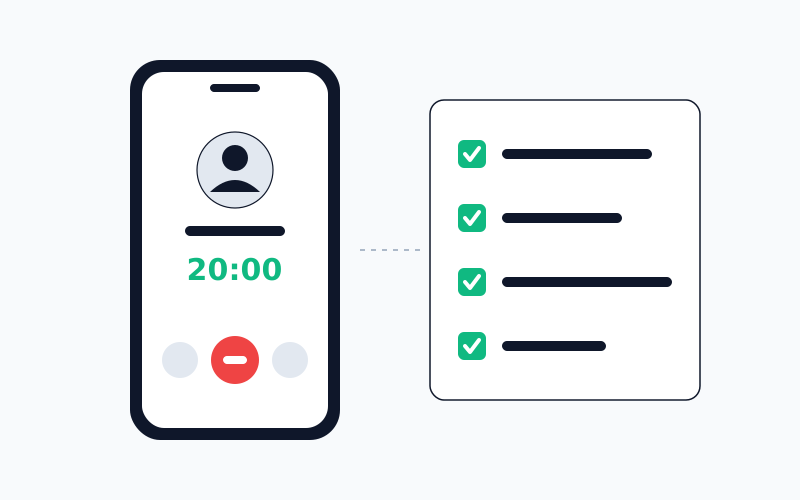
The first call is short, but it filters more candidates than any other stage. What the recruiter is listening for, and how to answer the money question.
The recruiter screen is the stage people prepare for least. It's twenty or thirty minutes, it's "just a chat", and the person on the other end usually isn't the one who'll manage you. So candidates show up without a plan.
That's a mistake, because the screen quietly removes more people than any later round. Not because they lack the skills, but because something in the call raised a doubt the recruiter couldn't resolve.
What the recruiter is actually doing
A recruiter often has dozens of candidates for one role and a hiring manager who wants a shortlist of five. Their job on this call is not to judge whether you're brilliant. It's to check that passing you forward won't waste the hiring manager's time.
In practice, they're listening for four things:
- Fit on paper holds up. The experience on your resume is real, and you can describe it simply.
- The logistics work. Location, right to work, notice period, start date.
- The money is in range. Your expectations and their budget overlap.
- You actually want this job. Not just any job.
Everything else is secondary. If you make those four easy, you're through.
Prepare a short version of your story
Expect some version of "walk me through your background". The recruiter wants a two-minute answer they can repeat to the hiring manager, not your full history.
A simple shape works well: what you do now, the one or two things you've done that matter most for this role, and why this role is the next step. Use plain words. The recruiter may not know your field's jargon, and if they can't repeat it, it doesn't help you.
"I'm a data analyst at a mid-size retailer, mostly on pricing. The project I'm proudest of cut our markdown waste by about a tenth. I'm looking for a role where I'm closer to the product decisions, which is why this one caught my eye."
Have the logistics ready
These questions sound routine, and that's why a hesitant answer stands out:
- Where are you based, and are you open to the work arrangement? If the role is hybrid three days a week, say whether that works. Don't hope to negotiate it later.
- Do you need sponsorship? Answer plainly. Hiding it only delays a no.
- What's your notice period? Know the real number in your contract.
- What else are you interviewing for? You don't have to name companies. "I'm in later stages with a couple of others" is a perfectly good answer, and it helps them move faster.
The money question
At some point you'll hear, "What are your salary expectations?" This is the part people dread most, and it's simpler than it feels.
First, ask for their range. Many recruiters will share it, and in a growing number of places they're required to post it anyway.
"I'd love to understand the budget for the role first, so we can see if we're aligned. What range are you working with?"
If they share a range and it works, say so: "That's in line with what I'm looking for." You don't need to name a number inside it yet.
If they won't share and press you, give a range you've researched, with the bottom at a number you'd genuinely accept. Mention it's for base salary and that the whole package matters. A range anchored on real data sounds informed. A number pulled from the air sounds like a guess, because it is.
What you want to avoid is the mismatch discovered in the final round. If their budget is far below yours, finding out on a twenty-minute call is a win for both sides.
Show that you want this one
Recruiters can tell the difference between someone who read the posting and someone who applied to two hundred jobs this week. You don't need deep research for a screen, but you do need a reason.
Spend ten minutes before the call on the company's site and the job description. Have one specific thing you can point to: the product, the team's focus, a problem the role mentions. Then ask one or two real questions at the end:
- "What does the hiring manager care about most in this role?"
- "What does the rest of the process look like, and how long does it usually take?"
- "Why is the role open?"
The answers are useful to you, and asking them signals you're thinking about the job, not just the offer.
Small things that cost people the call
- Taking it somewhere loud. If you're on the move, ask to reschedule. Recruiters would rather wait a day.
- Talking down your current employer. Even if it's deserved, it reads as a risk.
- Answers that don't match the resume. Dates, titles and numbers should line up with what they're looking at.
- No questions at all. It reads as indifference, even when it's nerves.
After the call
Send a short thank-you note the same day, especially if something came up you want to clarify. Ask for the next steps if they weren't clear, and note the recruiter's name. They're your guide through the rest of the process, and a good relationship with them helps more than most people realize.
The screen goes best when you can say honestly why this role, and that's easier when you've applied to fewer, better-matched ones. Jobiz's match score shows how a posting lines up with your profile before you apply, so the calls you get are ones you want.
No spam. Unsubscribe anytime.
Related Articles

Your employer made a counter-offer. Should you take it?
A counter-offer fixes the number, rarely the reason you looked. How to weigh one honestly, and how to turn it down without burning the bridge.
 Jobiz Team
Take-home assignments: how much unpaid work is too much?
A fair take-home is a few hours, scoped, and reviewed by a person. How to tell a reasonable one from free consulting, and what to say when it isn't.
Jobiz Team
"Do you have any questions for us?" What to ask at each stage
The last five minutes of an interview are yours. The questions that get real answers, matched to who you're talking to and how far along you are.
Jobiz Team