

How to write a cover letter
that actually gets read
6 Minutes read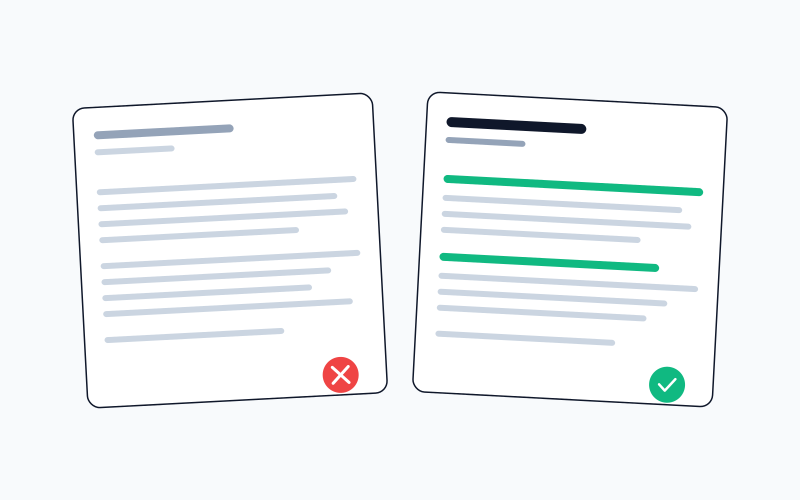
Most cover letters are skipped. Here's how to write one worth the 45 seconds a recruiter might give it.
Is the cover letter dead? No. Does anyone read yours? Also probably no.
Both things can be true. The cover letter as a document isn't obsolete: it still matters in specific situations. Yours probably isn't landing because it looks exactly like the 499 others in the stack. That's a writing problem, not a format problem.
First, the quick triage: does it matter for this role?
Before you spend thirty minutes on a letter, figure out whether anyone is going to open the attachment.
| Situation | Does the letter matter? |
|---|---|
| High-volume role at a big company | Rarely. Resume does 95% of the work |
| Small company, hiring manager reviews every app | Yes. May be the reason you advance |
| Mission-driven org or career pivot | Yes. Motivation is a real filter |
| Senior role with 3+ strong finalists | Yes. Tiebreaker |
| "Cover letter optional" on the form | Depends. Read the company, not the field |
Rule of thumb: when in doubt, write one. Half an hour is a cheap insurance policy against finding out later it was the tiebreaker.
The opening is everything
A recruiter opens the document. They read the first sentence. They decide whether to read the second.
So the first sentence is the document.
Here's what most candidates write:
I am writing to express my strong interest in the Senior Product Manager position at Acme Corp, which I believe aligns perfectly with my passion for innovation.
Nothing in that sentence is information. "Writing to express interest" is what you're doing by virtue of sending the email. "Strong" is an adjective any applicant could use. "Aligns perfectly with my passion" is a sentence the recruiter has seen so many times they literally cannot see it anymore.
Now a first sentence that gets read:
I've been using Acme's billing product for two years at my current company, and the 3.1 release is the reason I stopped evaluating alternatives. I'd like to help build what's next.
This version does four things in twenty-seven words: demonstrates product knowledge, shows you're paying attention to releases, implies a point of view, and states intent. That's more signal than most resumes produce in a page.
The test: could someone else send your first sentence to a different company after a find-and-replace on the company name? If yes, rewrite it.
What goes in the three paragraphs
If the letter is longer than three paragraphs, you're padding. Here's the structure:
Paragraph 1, Specificity. The first sentence rule above. Don't waste this paragraph on context the resume already provides.
Paragraph 2, Proof. One or two concrete achievements that would make the hiring manager say "oh, they've done exactly this." Not your whole career arc. The two examples that map onto this role.
Paragraph 3, Direction. What you want to be doing next and why this role fits. Surprisingly effective: most candidates describe their past; describing where you're going forces the reader to picture you in the role.
Under 250 words total. That's roughly the length of this section of the blog post. If you're writing longer, you're writing for yourself, not for the person reading it.
What to cut
The mental opening line you should always cut:
I am writing to apply for the [role] position I saw on LinkedIn...
They know. They opened the email because of the subject line.
The adjective stacks:
Passionate, results-driven, detail-oriented professional with a proven track record...
Every applicant wrote those words. They aggregate to zero signal. Replace the adjectives with specifics: "Shipped the Postgres 11 → 14 migration across four services handling 40M daily writes" cannot be cargo-culted.
The forward-looking closer:
I look forward to hearing from you and would welcome the opportunity to discuss my qualifications further.
Not bad. Not worth the lines it takes.
The 40 minutes × 50 applications problem
Here's the math nobody writes about.
Writing a genuinely tailored cover letter takes 20 to 40 minutes. If you're applying to 50 jobs, that's between 17 and 33 hours of pure writing, two full work weeks. You won't do it. Nobody does. So what happens is a copy-paste template gets renamed "tailored" because two sentences were swapped out.
Recruiters can smell this instantly.
If your application volume is high, your tailoring math doesn't work. One of the variables has to change: either apply to fewer roles, or restructure how tailoring gets done.
This is the specific friction worth automating (the structural tailoring across job descriptions) so the 20 minutes you do spend goes into the one or two sentences that couldn't have been auto-generated. The point of view stays yours. The reformatting stops being your problem.
On AI-written letters
Reframe the question. The issue isn't "is it OK to use AI." AI is the floor now: every serious applicant has access. The issue is what you add on top.
A clean AI draft is where every other candidate also started. If you ship it unedited, you've matched the median submission. What makes a letter land is the sentence that couldn't have been generated from the job description alone: a reference to a recent product launch, a detail about the team, an opinion. AI can't produce those from nothing. You still have to.
Use the tool. Don't ship the draft.
Two tests before you send
Read it out loud. Every sentence that sounds stiff, corporate, or that nobody would actually say in conversation: rewrite or delete. This catches more weak writing than editing on the page ever will.
Hand it to a friend who doesn't know the role. If they can't tell from the letter what job you applied to, you haven't tailored it. If they cringe at a sentence, the recruiter will too.
The admission
You can write a genuinely strong cover letter, read it aloud three times, test it on a friend, and the job still goes to someone who played pickup basketball with the hiring manager in 2019.
That's not a failure of the letter. That's hiring.
The letter isn't a lottery ticket. It's one of several inputs that stack toward a yes, and it only gets opened at all in a subset of cases. Write it well when it matters. Skip the theatrics when it doesn't. Stop pretending the outcome is fully yours to control.
If the cover-letter bottleneck is what's killing your apply rate, Jobiz handles the structural tailoring so your 20 minutes go into the two sentences that matter.
No spam. Unsubscribe anytime.
Related Articles
The recruiter screen: what the first call is really checking
The first call is short, but it filters more candidates than any other stage. What the recruiter is listening for, and how to answer the money question.
 Jobiz Team
Your employer made a counter-offer. Should you take it?
A counter-offer fixes the number, rarely the reason you looked. How to weigh one honestly, and how to turn it down without burning the bridge.
Jobiz Team
Take-home assignments: how much unpaid work is too much?
A fair take-home is a few hours, scoped, and reviewed by a person. How to tell a reasonable one from free consulting, and what to say when it isn't.
Jobiz Team