

What reference checks actually ask
(and how to prepare your references)
7 Minutes read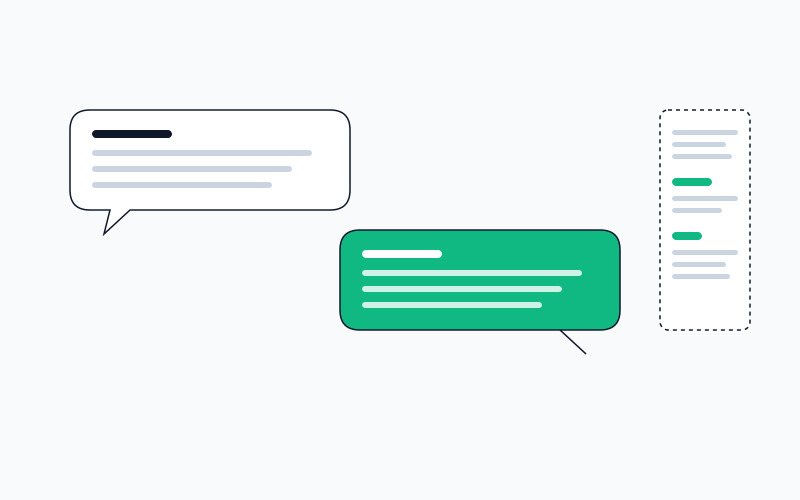
The call you never hear is often the call that decides. Here's what hiring teams ask and how to set your references up to answer well.
The reference check is the part of the hiring process you have the least visibility into. You finished the last interview. You submitted three names. Something happens. A week later you get an offer, or you get a silent rejection with no explanation.
For most candidates the reference check is a black box. For hiring managers who take it seriously, it's often the single most predictive data point in the process. Those two facts together are why this stage is more leverage than it looks like.
What hiring teams are actually trying to find out
A reference check isn't a credential verification. It isn't a "did this person work there from X to Y" check: that's HR, and it's a separate step. A real reference check is trying to answer two questions:
- Is the story consistent? The candidate told us they led X project with Y outcome. Does the reference describe it the same way?
- What's the texture you can't get from interviews? How do they operate under pressure, how do they handle disagreement, what are they bad at?
Good reference takers spend most of the call on the second question. The best ones treat the "what are they bad at" question as the whole point of the call.
The specific questions you should expect
Different companies have different scripts, but the shape converges. Here's what your references will almost always be asked:
- Confirm the scope. "Can you describe the project/team they led?" The question behind the question is whether the candidate exaggerated.
- Describe a real outcome. "Can you give me a specific example of work they shipped?" Vague answers here are a red flag: it suggests the reference doesn't actually know the work well.
- Assess growth areas. "What's one thing they'd need to work on in a more senior role?" The candidate who looks coached here is a tell. A good reference names something real.
- Probe conflict behavior. "Tell me about a time they disagreed with you or another stakeholder." Hiring managers care a lot about this. It's often a hidden swing factor.
- Rehire-or-not. "Would you hire them again?" Phrasing varies ("would you bring them onto a new team" or "if they applied tomorrow") but this question is universal and unusually revealing.
- Open-ended closer. "Anything else I should know?" The thing a reference volunteers here is sometimes the whole reason the call matters. Good and bad.
You'll also sometimes get a targeted question based on something specific to the role, e.g., "This role involves managing underperformers, can you describe how they've handled that?" If the hiring manager has a concern, they use the reference call to test it.
The three things that kill a reference check
These come up over and over again in post-mortems of withdrawn offers:
1. Vague, script-sounding answers. "They're a hard worker, very smart, great team player." Recruiters hear this twelve times a week. It isn't a compliment: it's a signal the reference either doesn't know the candidate well, or is carefully declining to give a real endorsement. Either reading hurts.
2. Inconsistency with the resume. The candidate said they "led a team of six." The reference says it was "two people, but they coordinated with others informally." This kind of drift is the actual reason most reference checks go sideways. The candidate didn't lie: they softened something that the reference, trying to be truthful, un-softened.
3. The "nothing" answer to the weakness question. When a reference says "honestly, I can't think of a development area", that is a red flag to every experienced hiring manager, not a compliment. It reads as evasiveness or lack of real familiarity.
How to set your references up to answer well
This is the lever most candidates underuse. References aren't something you gather. They're something you prepare.
A week before you expect the calls to happen, send each reference a short note. Tell them:
- The specific role you're interviewing for: company, title, a line about what it involves.
- The two or three themes the hiring team is probably evaluating. "This role emphasizes cross-functional collaboration and managing ambiguous priorities." (The same themes that came up in your own interviews. You already know what they are.)
- The one or two achievements you'd ideally want the reference to highlight, with enough specificity that they don't have to reconstruct what happened.
- A thoughtful growth-area framing. Not "here's what to say when they ask about weaknesses": that sounds coached when delivered. Rather: remind them of a real area you've worked on, so the answer they give is genuine and current, not a five-year-old complaint that no longer applies.
This isn't coaching the reference to lie. It's giving them context so their honest answer is usefully specific rather than vaguely positive. There is an enormous difference between a reference saying "they were great, very thoughtful" and a reference saying "they inherited a really messy migration in Q3 and untangled it by first rebuilding the test harness, that kind of foundational work is something they're unusually good at." The second one converts. The first one doesn't.
Who to pick, and who to avoid
The quality of your references matters more than their seniority. Some rules of thumb:
- Pick managers, not peers, where possible. Peer references are fine as a supplement but managers carry more weight because they're assumed to have seen your weaknesses.
- Pick recent over prestigious. A manager you worked with two years ago is more useful than a VP you worked with eight years ago. Currency matters.
- Pick people who saw the specific thing this role is about. If you're interviewing for an infrastructure role, the reference who managed you when you did infra is worth more than the reference who managed you when you did frontend, even if the latter title is more senior.
- Avoid anyone you left a strained relationship with, obviously, but also avoid anyone who is enthusiastic but doesn't remember specifics. A reference who can't recall details is nearly as bad as a mixed one.
- Never list a reference who hasn't confirmed they'll say yes. This is basic but gets violated constantly. If they don't pick up, your offer might not happen.
What to do if you suspect a reference went poorly
You usually won't know. Sometimes you will: a reference who confides "I wasn't sure what to say when they asked X" is giving you valuable post-hoc data.
If you suspect a reference hurt the process and you haven't received the offer yet, a short note to the hiring manager acknowledging "I realized I should have given more context on X" sometimes recovers it. More often, it doesn't, and you learn for next time. The learning is: prepare better upstream, don't try to repair downstream.
If the offer comes through despite a reference you're worried about, you don't need to mention it. Companies make offers knowing references aren't unanimous.
The honest take
Most candidates treat the reference stage as a formality. Companies that take hiring seriously treat it as a second round of the interview, conducted without the candidate in the room. Those two attitudes do not produce the same outcomes.
A thirty-minute phone call the week before with each of your references, walking them through what the role is about and what you'd love for them to emphasize, is probably the single highest-leverage half-hour of your job search. Nobody does it. Do it.
If the offer stage is where the search got to, the last lever is making sure the references talk about the version of your work that actually maps onto the role, not a generic summary. Jobiz surfaces the specific wins from your history so the prep conversation with each reference is concrete instead of scrambled.
No spam. Unsubscribe anytime.
Related Articles
The recruiter screen: what the first call is really checking
The first call is short, but it filters more candidates than any other stage. What the recruiter is listening for, and how to answer the money question.
 Jobiz Team

Your employer made a counter-offer. Should you take it?
A counter-offer fixes the number, rarely the reason you looked. How to weigh one honestly, and how to turn it down without burning the bridge.
Jobiz Team
Take-home assignments: how much unpaid work is too much?
A fair take-home is a few hours, scoped, and reviewed by a person. How to tell a reasonable one from free consulting, and what to say when it isn't.
Jobiz Team