

Job titles are meaningless
(here's what actually matters)
5 Minutes read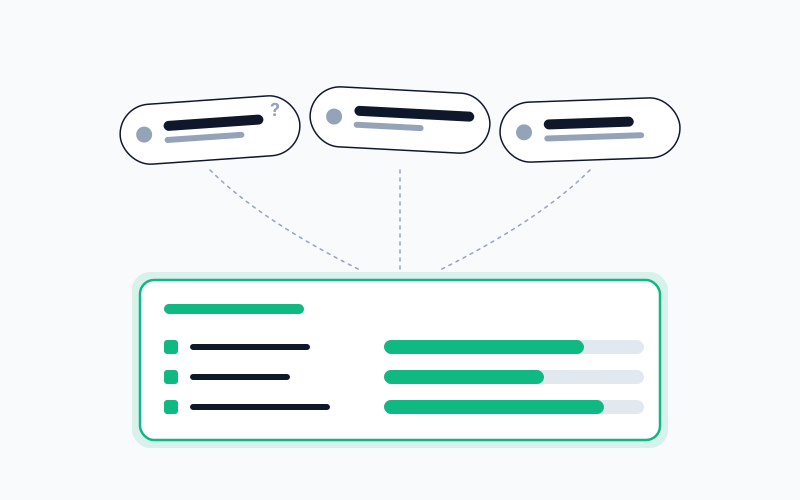
A 'Senior Engineer' at one company is a 'Staff Engineer' at another. Here's how to decode the title chaos.
You're a Senior Software Engineer. You apply for a Senior role at a new company. They say you're actually at their mid-level.
Welcome to the chaos of job titles.
Why Titles Don't Translate
Every company defines levels differently. There's no standard. A "Senior" engineer at a 50-person startup might have 3 years of experience. At a large tech company, that same person might be "Level 4" or "Software Engineer II."
Common causes:
- Company size: Startups have fewer levels, so everyone's "Senior" faster
- Industry norms: Finance and consulting use different conventions than tech
- Title inflation: Some companies give fancy titles instead of raises
- Arbitrary decisions: Someone picked the names years ago and they stuck
The Real Levels (Roughly)
Despite the chaos, most companies follow a similar structure. The years-of-experience ranges below are a rough proxy only: big-tech ladders explicitly decouple level from tenure, and trajectories vary wildly. It's common to see Staff engineers at 6 years in startup environments, and 10-year engineers who stay mid-level at larger companies. Scope and impact drive the level, not the calendar.
Individual Contributors (ICs)
Entry/Junior (0-2 years)
- Learning the job
- Needs guidance on most tasks
- Works on well-defined problems
Mid-Level (2-5 years)
- Works independently
- Owns features or projects
- Mentors juniors occasionally
Senior (5-10 years)
- Owns significant systems or areas
- Makes technical decisions
- Mentors regularly
- Expected to see the bigger picture
Staff/Principal (10+ years)
- Works across teams
- Sets technical direction
- Solves ambiguous, company-wide problems
- Title varies wildly: Staff, Principal, Architect, Fellow
Managers
Manager (first-line)
- Manages individual contributors directly
- Typically 3-8 reports
- Still somewhat hands-on in some companies
Senior Manager/Director
- Manages managers
- Owns a function or larger team
- Less hands-on, more strategy
VP/Executive
- Owns entire organizations
- Reports to C-suite
- Mostly strategy, politics, and leadership
What to Focus on Instead of Titles
Scope of Work
What would you actually own? "Senior Engineer" managing a team's core infrastructure is very different from "Senior Engineer" fixing bugs in a mature codebase.
Ask in interviews:
- What would I own in the first 6 months?
- How much autonomy would I have?
- What does success look like in this role?
Compensation Band
Titles don't pay rent. What matters is the salary, equity, and bonus attached to the level.
Ask about the compensation range for the role. If a "Senior" role pays what you made as a mid-level elsewhere, the title is just marketing.
Team Structure
Who would you report to? Who would be your peers? Understanding the org chart tells you more than the title.
A "Staff Engineer" who reports to a Director is in a different position than one who reports directly to the VP of Engineering.
Growth Path
What would you need to do to get promoted? How often does that happen? Some companies promote quickly. Others almost never.
"Senior Engineer" can be a stepping stone or a terminal level depending on the company.
The Level.fyi Approach
For tech roles, levels.fyi normalizes levels across companies. The rough mapping goes: Amazon SDE I ≈ Google L3 ≈ Meta E3 (entry), SDE II ≈ L4 ≈ E4 (mid), Senior SDE ≈ L5 ≈ E5 (senior), Principal SDE ≈ L6 ≈ E6 (staff), and Senior Principal ≈ L7 ≈ E7. Amazon uses fewer titles than its headcount suggests, so each level spans a wider range than the Google or Meta equivalents.
This is useful for:
- Understanding what level you might be mapped to at different companies
- Salary negotiation (knowing what peers at that level earn elsewhere)
- Setting expectations in interviews
When Titles Matter
Externally
If you're job searching, your title influences how recruiters and hiring managers perceive you. "Staff Engineer" opens different doors than "Software Engineer II."
This is why some people negotiate for titles even when the pay is the same.
Internally
At some companies, title determines what you're allowed to do. Only "Senior" engineers can review code. Only "Principal" engineers can make architecture decisions.
Ask about this if you're unsure.
When They Don't
Plenty of people have impressive titles at small companies and struggle to get equivalent roles at larger ones. The title didn't reflect the scope of work.
Conversely, people at large companies with modest titles (L4, IC3, etc.) often have more impressive experience than the title suggests.
Interviewers who know what they're doing look past titles to understand what you actually did.
The Negotiation Angle
Sometimes companies won't budge on salary but will negotiate titles. This can be valuable:
- Future recruiters will see "Senior" vs "Mid-level"
- Internal perception might shift
- Might unlock different career paths
But don't take a lower title for higher pay if external perception matters to your next move. And don't take a higher title if it comes with expectations you can't meet.
The Bottom Line
Titles are signals, not facts. Use them as one data point among many.
What matters is: What would you actually do? What would you learn? How would you be compensated? Where could you grow?
If those answers are good, the title is just letters on a LinkedIn profile.
Calibrating which level you're actually targeting (across companies that use the same titles to mean different things) is the quiet work most searches skip. Jobiz helps filter what's a genuine match for your level from what just shares a title.
No spam. Unsubscribe anytime.
Related Articles
The recruiter screen: what the first call is really checking
The first call is short, but it filters more candidates than any other stage. What the recruiter is listening for, and how to answer the money question.
 Jobiz Team

Your employer made a counter-offer. Should you take it?
A counter-offer fixes the number, rarely the reason you looked. How to weigh one honestly, and how to turn it down without burning the bridge.
Jobiz Team
Take-home assignments: how much unpaid work is too much?
A fair take-home is a few hours, scoped, and reviewed by a person. How to tell a reasonable one from free consulting, and what to say when it isn't.
Jobiz Team