

When to walk away
from an interview process
8 Minutes read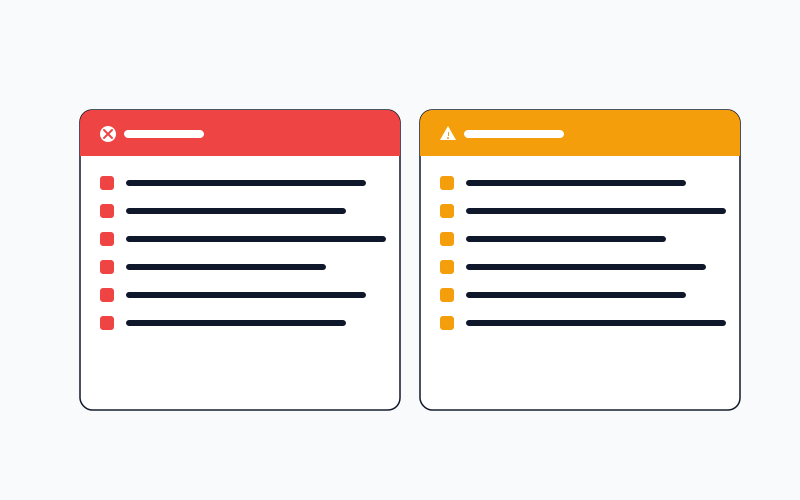
Most interview advice is about performing. This one's about noticing. Here are the red flags that mean the job isn't worth the offer, even if the offer comes.
Job-hunting literature is almost entirely about getting offers. Almost none of it is about the inverse skill: recognizing, mid-process, that the role you're interviewing for is one you shouldn't accept even if they offer it.
This is the more valuable skill, statistically. A bad job accepted is typically 9–18 months of diminished work, delayed earnings, and a harder next search (you now have to explain why you're leaving). A process you correctly walk away from is maybe 8 lost hours. The asymmetry is huge. But the psychology works against recognizing it: you've invested time, the anxiety of "what if I don't get another offer" is loud, and at each individual stage the red flag looks smaller than the sunk cost.
Here's a guide to the signals worth trusting.
The hard red flags (walk away now)
Some signals are strong enough to end the process on their own. If you observe any of these, you should not accept an offer if extended.
They lie about compensation. Early stages: "we can't share the range until later." Later stages: the range moves. When the offer comes, it's 20% below what was discussed in the final round. This isn't negotiation; it's a specific breach of trust that predicts how the company negotiates with employees internally.
The scope of the role keeps changing. Interview 1: "you'll own the migration." Interview 3: "actually, we've been thinking about this as more of a platform role." Interview 5: "we'd love you to help with BD as well." The role is not a role; it's a shape they're trying to fit around whoever says yes.
Multiple interviewers contradict each other about something material. Not trivia, material. Hiring manager says the team has eight people; skip-level says "we're rebuilding, it's three." Product lead says you'll have a roadmap; VP says "the roadmap is TBD and you'll help figure it out." This is not miscommunication. It's a team that isn't aligned on what this role is, and you will feel that internal disalignment every day you work there.
Disrespectful scheduling. Repeated last-minute reschedules. Interviews starting 20+ minutes late without apology. Asking you to do a 90-minute case study with less than 24 hours notice during your working hours. This is not quirk-of-scheduling. It's a company with low respect for external professionals, which typically means low respect for internal ones too.
They refuse to answer reasonable questions about the role. "What happened to the previous person in this role?" is a standard question. An answer like "we don't discuss past employees" is a flag. It means either the departure was acrimonious or they don't trust you with the context, neither is a good sign for the role you're about to step into.
Aggressive pressure on you to take the offer fast. "You need to decide by EOD tomorrow" on an offer received Thursday afternoon. The only legitimate reason for real urgency is a specific external event (a board meeting, another candidate with a time-bound competing offer) that they can explain. Generic "we need your answer" pressure is negotiation theater, and it predicts how they'll treat future decisions you need to make about your time.
These are not "ambiguous signals you should consider." They are real patterns that correlate strongly with bad post-hire experience. When observed, end the process cleanly.
The soft red flags (investigate before continuing)
Other signals are worth pausing on but don't auto-disqualify. They warrant a targeted question in the next interview.
The hiring manager seems unprepared. They clearly haven't read your resume. They ask generic questions. They seem tired of the process. This could be a sign of high interview load, or it could be a sign of someone who isn't excited about the hire. Ask yourself: is this someone I'd want as a direct boss? If the answer is "not really," the interview has already given you the information you need.
Every interviewer is positive in the same specific way. "Great team, great culture, we're doing amazing work, super excited about what we're building." If four interviewers say nearly the same four sentences, you're hearing a script. Healthy teams have nuanced views about what's good and what's broken. A perfectly aligned marketing story usually means people are careful about what they say externally, which is itself a cultural data point.
Nobody will discuss what's hard about the role. You ask "what's the biggest challenge someone in this role would face?" and get a non-answer like "finding the right balance between execution and strategy." Specific, real challenges are not a bad thing: pretending there are none is. Ask again, phrased differently, in the next interview. If the pattern holds, it's a flag.
Very high turnover in the function you'd join. Three people in your target role in the last two years, with none still at the company. LinkedIn will tell you this in five minutes. Sometimes there's a legitimate reason (team reorg, the function was immature). Usually it's a function-level problem.
The hiring process itself is chaotic. Multiple different recruiters, conflicting information about what round you're in, interviews scheduled wrong, feedback delayed. How a company handles their hiring process is a sample of how they handle operations generally. Chaos here predicts chaos internally.
They can't explain what success in the first 90 days looks like. This is the single most diagnostic question to ask. If the hiring manager can give a clear, specific, measurable answer, they've thought about the role. If they give a vague "get ramped up and start contributing" answer, they haven't. You do not want to report to a manager who hasn't thought about what the role is for.
The misleading signals (ignore)
Some things feel like red flags but aren't actually predictive.
They don't have a polished employer brand / Glassdoor presence. Smaller or younger companies often don't. Zero predictive value.
The office is a mess or the building is ugly. Physical environment is a weak signal, especially now that most teams are hybrid or remote.
The interviewers are nervous or informal. Plenty of strong teams are staffed by people who don't perform interviewing well. This can actually be a positive sign of authenticity. Don't confuse "interview polish" with "team quality."
One interviewer seems skeptical of you. This is normal. Good interview panels have a dissenting voice. A unanimous panel can mean you're impressive; it can also mean the panel isn't really evaluating you.
They don't respond for a few days between rounds. Timelines slip. Assume benign causes unless there's other evidence of dysfunction.
The three questions to ask in late stages
When you're in final rounds and trying to decide whether to keep going or walk, these three questions surface more signal than any other:
"What's the first thing this role needs to unblock or fix?" If there's a specific answer ("we need to replatform our infrastructure off X"), you know what you're stepping into. If it's abstract ("scale the team, drive excellence"), the role hasn't been scoped and you'll be figuring it out for six months.
"If you were me, what would you be worried about joining here?" Forces a real person on the inside to say something specific and slightly uncomfortable. A good answer acknowledges something real. A non-answer is itself a data point.
"Who should I talk to who would give me a complete picture of the team?" Healthy teams will offer you an honest peer or two. Teams that are worried about the picture will deflect, "we've covered everything in the process already." That deflection is a signal.
The part about walking away gracefully
If you do decide to pull out, do it cleanly. A short, polite email to the recruiter stating that you've decided not to continue. No drama, no list of grievances, no over-explanation. Something like:
Thank you for the time you and the team have put into this process. After reflection I've decided this isn't the right fit for me at this stage, and I'd like to withdraw my candidacy. I appreciate the conversations.
That's it. You preserve the relationship with the recruiter for future roles. You preserve your reputation in a small industry. You don't burn bridges you might want later.
The honest frame
Most candidates do not walk away from processes they should walk away from. The sunk cost of hours invested feels bigger than the future cost of a bad year at a bad job. It isn't.
If two or three of the hard red flags are present, you already have your answer. If several soft red flags are accumulating and you've asked the probing questions and the answers are still unsatisfying, you also have your answer.
The test: if you were told right now that the offer would come tomorrow, what would your stomach do? If the honest answer is "hope they don't send it," you already know. Exit gracefully. Spend the recovered hours on the next process.
If the goal is keeping enough live processes going that walking from one isn't a crisis, Jobiz helps keep the pipeline full so a single bad process doesn't have to be the only process. The decision to walk gets easier when the next interview is already on the calendar.
No spam. Unsubscribe anytime.
Related Articles
The recruiter screen: what the first call is really checking
The first call is short, but it filters more candidates than any other stage. What the recruiter is listening for, and how to answer the money question.
 Jobiz Team
Your employer made a counter-offer. Should you take it?
A counter-offer fixes the number, rarely the reason you looked. How to weigh one honestly, and how to turn it down without burning the bridge.
Jobiz Team
Take-home assignments: how much unpaid work is too much?
A fair take-home is a few hours, scoped, and reviewed by a person. How to tell a reasonable one from free consulting, and what to say when it isn't.
Jobiz Team