

How to explain a career gap
on your resume without over-explaining
10 Minutes read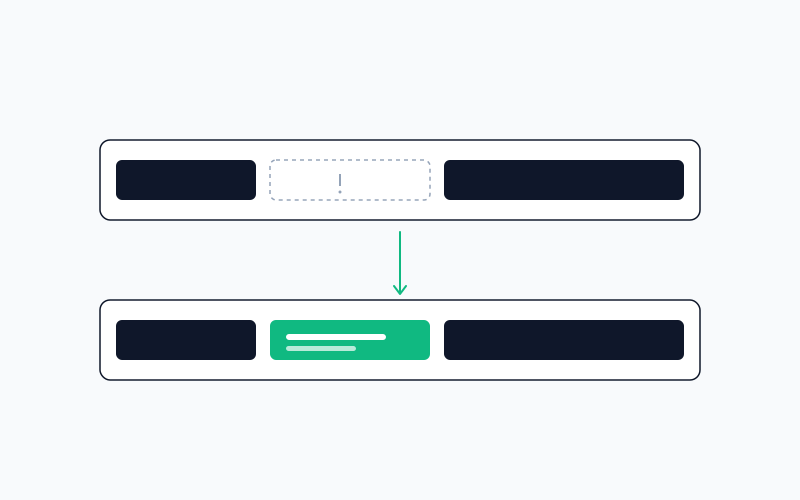
Gaps don't sink applications. Bad framing of gaps does. Here's how to handle six months or three years off the timeline, on the resume and in the interview.
The career gap has developed an unearned reputation as a resume killer. It isn't, not by itself. What hurts candidates is how they handle it: hiding it, over-explaining it, or treating it as something shameful when, in 2026, almost every hiring manager has either taken a gap or has someone on their team who did.
The actual fix is surprisingly simple. Name the gap. Frame it in one short line. Move on. This post is the specific playbook for doing that across different kinds of gaps and different resume contexts.
What hiring managers actually care about
Before the tactics, it helps to know what the person reading your resume is actually thinking when they see a gap.
They're not thinking "this person was unproductive." They're thinking:
- Can this person explain what happened? A gap with no explanation looks evasive. A gap with a brief, matter-of-fact explanation looks like a human life event.
- Is the gap over? If it's ongoing, the hiring manager wants to know why now is the right time to return. If it's in the past, they want to know what you did after.
- Are the skills current? A three-year gap raises the reasonable question of whether your last role's tech / context is still relevant. A candidate who proactively addresses currency clears this.
None of these concerns are about judgment. They're about risk: the hiring manager trying to understand what they're actually looking at. Your job is to answer the questions before they have to ask.
The kinds of gaps
Gaps vary in what causes them and what's appropriate to say. Five common types:
1. Caregiving (children, parents, family)
Most common. Hiring managers see this constantly. It's fine. The resume line is a single phrase, usually something like:
2023–2025: Parental leave / caregiver
or
Feb 2024 – Aug 2025: Full-time caregiving (family health)
No three-paragraph explanation. The phrase is enough.
In interviews, one sentence of context is enough: "I took two years to be the primary caregiver for my kids while my partner's role required travel. I'm returning now that they're both in school." Don't apologize. Don't over-explain. Move on.
2. Health (yours or a family member's)
This one requires a judgment call about how much you want to share.
The safe, universally accepted phrasing:
2024 – 2025: Medical leave
or
2024 – 2025: Personal medical reasons
You are not obligated to share specifics. Most employers will not probe further. If someone does probe, you can say "I've fully recovered and am ready to return to work" without providing details. That's a complete answer and a reasonable professional boundary.
Do not lie about this. If asked directly whether your health is stable now, be honest. But you're allowed to keep the specifics private.
3. Layoff
Perhaps the most common gap in 2023–2026. Also the least stigmatized.
Resume: the gap between your layoff and next role doesn't need explanation at all if it's under 6 months. Most hiring managers assume "was laid off, took reasonable time, job-searched." If the gap is over 6 months, a brief line helps:
Mar 2024 – Present: Actively job-seeking following company-wide layoff at Acme
or
2024: Consulting and project work while searching for next full-time role
(The second version is fine if you actually did some consulting or project work. Don't invent it.)
In interviews, own it directly: "I was part of the 15% RIF at Acme in March. I've been selective about the next role: I'd rather find the right fit than the first offer." This is true for most people in this situation and it reframes the gap as intentionality.
4. Sabbatical / travel / personal growth
The intentional-time-off gap. More common than people assume.
Resume:
2024 – 2025: Sabbatical (travel, personal projects)
or (if the sabbatical involved concrete learning)
2024 – 2025: Sabbatical (completed [specific project / studied X / built Y])
In interviews, lead with what you got out of it: "I took a year to travel after six years at the same company. It forced me to step back from the day-to-day and think about what I actually wanted to build next. I came back clearer on that, which is part of why I'm interviewing here specifically."
The interviewer is listening for whether the sabbatical was growth or drift. Frame it as growth, genuinely, not performatively.
5. Career change / education gap
If the gap was spent pivoting into a new field (a bootcamp, a degree, a self-directed study program) this is the easiest gap to frame because it's already a positive story.
Resume:
2023 – 2024: Full-time MSc in Computer Science, Université de Montréal
or
2023 – 2024: Full-stack engineering bootcamp (Hack Reactor); personal projects: [short list]
In interviews, just tell the story. "I was a teacher for six years and decided to move into engineering. I did a nine-month intensive, built two projects end-to-end, and I'm now looking for a junior engineering role where I can apply it." This is a strong frame.
What to actually put on the resume
The tactical question: where does the gap appear on the document?
Option 1: As its own line in your experience section.
This is the cleanest approach. Treat the gap like a role: a block of time with a one-line description.
ACME CORP, Senior Engineer
2018 – 2023

PARENTAL LEAVE, Primary caregiver
2023 – 2025

WIDGET CO, Engineering Manager
2015 – 2018
This is clearer than leaving the gap unlabeled. The reader's eye lands on the gap and gets the explanation immediately.
Option 2: A brief line in your summary.
If the gap was very short (under 6 months) or you don't want it to be its own block, a line in the summary works:
"Senior engineer with 8 years of infrastructure experience. Returning to full-time work after a year of caregiving."
Single sentence. No excuses.
Option 3: Omit entirely, only if justifiable.
If the gap is under 3 months and between roles that both appear on the resume, you can sometimes omit it entirely. Most resume formats show years-of-employment, not months, so a gap of a few months between "2022" at Company A and "2023" at Company B is invisible anyway.
Do not use this option for longer gaps. Attempting to hide a 6+ month gap by fudging dates almost always gets caught at reference-check time, and the reputational cost is much higher than the cost of just being honest.
What not to do
A few patterns that hurt candidates more than the gap itself:
Don't pad unrelated activities to fill the gap. If you took two years off to raise kids, don't list the PTA and book club as "leadership experience." Recruiters can tell. Real caregiving is a legitimate explanation on its own.
Don't apologize in the resume. Phrases like "unfortunately I had to take time off..." or "I regret the gap but..." read as anxious. The gap is a fact. Facts don't need apologies.
Don't lie about ongoing freelance work. "Consulting and independent projects" is fine if you did some. If you didn't, if you literally took the time off, saying "freelancing" is one of those things that collapses under any real interview question ("which clients? what were the projects?"). Don't put yourself in that position.
Don't over-explain in cover letters. A cover letter is not the place for a four-paragraph account of your gap. One clean sentence ("I took 18 months off to manage a family health situation; I'm ready to return to full-time work") is plenty.
Don't volunteer more than asked. In interviews, give the one-sentence answer. If the interviewer wants more, they'll ask. Most won't. The gap is less interesting to them than it feels to you.
The interview script
When the question comes (and in most interviews, if there's a visible gap on the resume, it will come) the script is:
- Name what the gap was. One short phrase.
- Say it's over and why now. What made you ready to return.
- Pivot to the role. Why you're excited about this specific thing.
Example:
"I took two years off when my second kid was born. The childcare situation is stable now, and I'm returning at a point in my career where I actually know what I want to focus on, which is why your team reached out was perfect timing."
Total length: 25 seconds. Addresses what they wanted to know. Ends pointed at the role.
That's the whole script. Don't extend it. Don't over-explain.
The honest closing
Most candidates carry way more anxiety about their gap than the gap actually warrants. A clear, short, matter-of-fact framing clears almost all of it. The gap becomes a sentence on a page and a sentence in an interview, and then the rest of the conversation is about what you can actually do for the role.
The gap that hurts is the gap that's hidden, fudged, or overexplained. The one that doesn't hurt is the one that's named and moved past. Pick the second one.
Common questions
How long of a gap actually raises concerns?
Under 6 months, most recruiters assume it's a standard between-jobs pause and don't think about it. Six to twelve months warrants a one-line label on the resume. Beyond a year, you want to name the reason and say it's over. The exact threshold matters less than the habit of labeling anything longer than a few months, matter-of-factly.
Should I hide a short gap (under 6 months)?
You don't have to hide it: most resume formats only show years, so a few months between roles is already invisible. If it isn't, a one-line label is enough. Don't try to fudge dates to eliminate a short gap; it's not worth the reputational risk if discovered.
What if I was fired?
Don't say "fired" on the resume; a role ending is a role ending. In interviews, if asked, a short honest answer works: "I wasn't the right fit for the direction the team was going; we parted ways." Pivot to what you've learned and what you want next. Don't volunteer more detail than necessary. Do prep this answer before interviews: winging it is where candidates get hurt.
Can I list freelance work during a gap?
Only if you actually did freelance work. "Consulting during 2024" is fine if you had any real clients. It's not fine if you took the time off and are back-filling. Any interviewer asking "which clients?" will expose it in one question. Claiming freelance work when there was none is one of the costlier forms of resume embellishment.
Should I explain the gap in the cover letter?
One clean sentence, at most. "I took 18 months off for a family caregiving situation; I'm ready to return to full-time work now." That's plenty. The cover letter is not the place for a multi-paragraph account.
Do ATS systems filter out resumes with gaps?
Modern ATS systems don't filter for gaps: they match keywords and skills. The gap matters only when a human reads the resume. That's the level at which the labeling advice above applies.
What if my gap is from mental health reasons?
You can frame it as "personal medical reasons" or "medical leave" without getting specific. You are not obligated to share diagnosis details. Most interviewers will respect that framing and not press further.
For more on how to prepare your references when a gap may come up in a reference check, see the reference-check playbook.
If phrasing the gap consistently across every application (resume line, summary sentence, interview script) is one more thing to keep straight, Jobiz keeps those in sync so you're not reconstructing the same answer five times a week.
No spam. Unsubscribe anytime.
Related Articles
The recruiter screen: what the first call is really checking
The first call is short, but it filters more candidates than any other stage. What the recruiter is listening for, and how to answer the money question.
 Jobiz Team

Your employer made a counter-offer. Should you take it?
A counter-offer fixes the number, rarely the reason you looked. How to weigh one honestly, and how to turn it down without burning the bridge.
Jobiz Team
Take-home assignments: how much unpaid work is too much?
A fair take-home is a few hours, scoped, and reviewed by a person. How to tell a reasonable one from free consulting, and what to say when it isn't.
Jobiz Team