

'Why are you leaving?' The answer
that doesn't throw anyone under the bus
9 Minutes read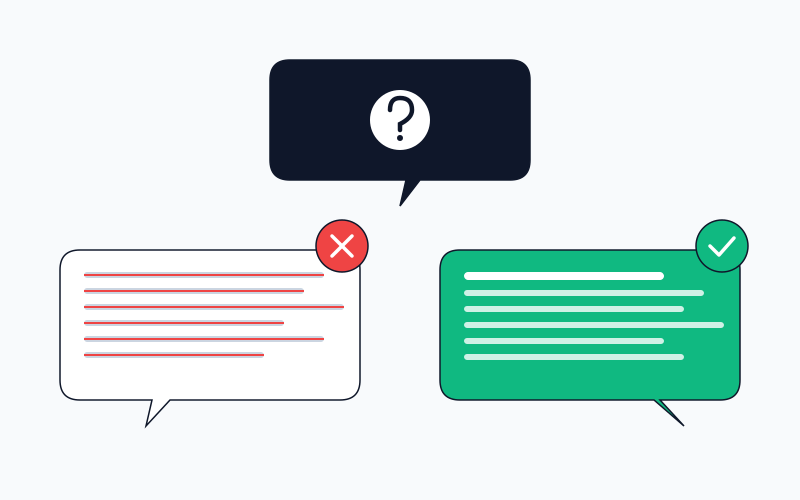
The honest reason you're leaving is rarely the right interview answer. Here's how to be truthful without burning your current employer, in every common case.
Every interviewer asks some version of this question. It sounds conversational. It's actually one of the few moments where the interviewer is listening hard, because the answer reveals things no other question does: about your judgment, your professionalism, and how you'll eventually talk about them when you eventually leave this next job.
Candidates fall into two common traps. One is over-sharing: venting about a bad manager, a toxic team, a broken product, or a political environment. The other is under-sharing: robotic answers like "I'm looking for new challenges" that tell the interviewer nothing and make them suspicious.
There's a cleaner path between those two poles. It requires translating the honest internal reason into the version a professional can say out loud, in a way that's still true but doesn't cost you the interview or burn your current workplace.
The core principle
Before the tactics, the principle. Interviewers are listening for three things on this question:
- Are you leaving something, or running toward something? Running-toward answers land better than running-from.
- Can you articulate the reason without venting? How you talk about a frustrating situation reveals your future-self talking about them in two years.
- Does the reason make sense given the role you're interviewing for? If you say you're leaving for more senior work and you're applying to a lateral role, something doesn't add up.
Every version of the answer you construct should hit at least two of the three. The good answers hit all three in under 40 seconds.
The structure
Regardless of what you're actually running from, the shape of the answer is the same three beats:
- One short line naming the context. Not a list of grievances, one sentence.
- What you want that you don't currently have. Phrased in terms of the work, not the people.
- Why this role specifically is that thing. Pivoting outward, away from the current situation.
Let's run this through the most common real reasons people leave.
Case 1: You're stuck (no growth, no promotion, no scope increase)
What you feel: "I've been asking for more responsibility for two years and nothing happens. I've outgrown this role."
What to say:
"I've been at my current company for four years and I've taken the scope as far as I can there. The next thing I want is [specific expansion of scope], which is exactly what this role would involve."
Notice what's different: you're not saying "they wouldn't promote me." You're saying "the scope I want isn't available there." The former reads as grievance; the latter reads as growth planning. Both are true. Only one lands.
Case 2: Your manager is difficult / there's a clash
What you feel: "My manager is a micro-managing disaster and I can't work under them anymore."
What to say:
"I'm looking for a team environment where the engineering culture is [specifically what you want: autonomy, more code review, more mentorship, whatever the gap is]. My current team is optimized for a different operating style, which I've respected, but I know now what kind of environment I do my best work in."
Two rules for this one. First: never name the manager or the specific conflict. Second: frame it as a mismatch, not a defect. "Different operating style" is a factual description. "Terrible manager" is a judgment. Interviewers treat the first as maturity and the second as a red flag about you, regardless of whether the manager is genuinely terrible (and they often are).
The interviewer is not going to call your current manager. They're just evaluating whether you're the kind of person who talks about current bosses in interviews. Don't be.
Case 3: The company is struggling / possible layoffs / product dying
What you feel: "The ship is sinking and I need to get off before it does."
What to say:
"The company is going through a significant restructuring, and I've decided this is a good moment to make the move rather than wait. Longer-term, I want to be [something specific about the next role]."
Don't lie. If there are known layoffs, you can say "there were layoffs in Q3 affecting my team": that's public information. What you should not do is speculate about the company's future or badmouth leadership. Interviewers notice when candidates seem to enjoy describing their employer's decline.
Case 4: Compensation
What you feel: "I'm underpaid for what I do and they won't fix it."
What to say:
"I've built significant ownership in my current role and my compensation hasn't scaled with it. I've raised it internally and the response wasn't what I was hoping for, so I'm now exploring externally."
Comp is a valid reason. You're allowed to say it, as long as it's not the only reason. If money is the entire answer, you'll read as mercenary. Pair it with one forward-looking element: the scope you want, the stage of company, the problem space.
Avoid specifics ("they offered me $X and I wanted $Y"). Avoid anger. Matter-of-fact is the right register.
Case 5: You were laid off or performance-managed out
What you feel: "I was let go and I need to explain it without it sounding bad."
What to say:
"I was part of the layoff in March (Acme cut about 15% of the workforce across infrastructure and platform teams). Since then I've been taking time to be selective about what I do next, which is why I've been specifically interested in roles like this one."
Layoffs are massively destigmatized in 2026. Most interviewers have been through one or know many people who have. Owning it clearly, with specifics if they're public, is significantly better than being evasive. Candidates who try to hide a layoff ("I decided to leave to explore new opportunities") invariably get caught in follow-up questions and it's worse than just saying it.
If it was a performance-managed exit rather than a layoff, the answer is different and more delicate. Don't lie. References will reveal it. The framing: "I wasn't the right fit for the direction the team was going in, and we parted ways. What I've learned is [specific self-aware thing]. That shapes what I'm looking for now, which is [specific thing]." Hard to do well. Worth preparing.
Case 6: Boredom / stagnation
What you feel: "This is boring and I dread Mondays."
What to say:
"I've been doing a specific type of work for [N years] and I'm ready for the next challenge. What's pulling me specifically is [the specific thing about this new role]."
Don't say bored. "Bored" reads as low commitment in a professional. "Ready for the next challenge" is the same thing said in grown-up language. The interviewer understands this is code; they appreciate that you know the code.
Case 7: The commute / relocation / life change
What you feel: "We're moving cities and I need a new job in the new city."
What to say:
"We're relocating to [city] in [timeframe]. I'm using this as a moment to reassess what I want next, and what's pulling me to roles like this is [specific]."
Very clean. No drama. The life-change answers are the easiest because they're factual and neutral.
Case 8: The company is fine but you want something different
What you feel: "Honestly, nothing is wrong. I just want to do something else."
What to say:
"My current role is fine: the company is good, the team is good, but I've realized I want to work on [specific thing] next, and that's not where my current company is headed."
Saying your current company is fine is a strong move. Interviewers read it as "this person leaves for real reasons, not dramatic ones, which means when they eventually leave this next job it won't be a dramatic exit either." That's a quiet positive.
The things to never do
Universal don'ts across every version:
Never name a specific person you had conflict with. Not your manager, not your skip-level, not the colleague who screwed you on the promo. Ever.
Never describe a problem without naming what you want instead. "My manager is a micromanager" is a problem statement. "I work best with more autonomy" is a preference. The preference is what makes the answer professional.
Never say "I just wanted new challenges." Empty phrase. Says nothing. Gets treated as evasion.
Never badmouth the product or the company's strategy. Even if the product is objectively bad, badmouthing it tells the interviewer how you'll talk about their product in two years.
Never give the full story. The honest full reason almost always has some element that makes you look bad: a decision you regret, a political thing you handled imperfectly, an emotional trigger. You don't owe interviewers the full story. The professional version is a translation, not a full disclosure.
The rehearsal
Before any interview, know your answer. Write it down. Read it aloud. Time it: it should be 30 to 45 seconds, no longer.
Watch for these tells that you're over-rehearsed: the answer sounds like a cover-letter sentence, you use the word "synergies" or "opportunities" or anything else that reads as corporate filler, you're answering for 90 seconds. Rewrite.
Also watch for tells you're under-rehearsed: you pause, you backtrack, you give three versions in one answer. Write it down, read it aloud, and practice until it lands clean.
The bigger frame
The "why are you leaving" question is, technically, about the past. Strong candidates answer it in a way that's really about the future: what they want next, why this role is it, where their career is heading. That re-framing is the move. The interviewer isn't actually interested in your current job. They're using the question as a window into how you think about your career.
Answer accordingly. Brief, forward-pointed, no grievances, specific about the next thing. The whole thing takes forty seconds, and then you're onto the part of the interview that's actually about the role. For the other question you'll get in the same opening minute, see 'tell me about yourself': the three-beat structure that works.
Every interview cycle hits the same handful of recurring questions: this one, "tell me about yourself," "what's your biggest weakness." Jobiz helps keep the prep you've done for a specific role close to hand, so you're not rewriting the same answer the morning of each interview.
No spam. Unsubscribe anytime.
Related Articles
The recruiter screen: what the first call is really checking
The first call is short, but it filters more candidates than any other stage. What the recruiter is listening for, and how to answer the money question.
 Jobiz Team

Your employer made a counter-offer. Should you take it?
A counter-offer fixes the number, rarely the reason you looked. How to weigh one honestly, and how to turn it down without burning the bridge.
Jobiz Team
Take-home assignments: how much unpaid work is too much?
A fair take-home is a few hours, scoped, and reviewed by a person. How to tell a reasonable one from free consulting, and what to say when it isn't.
Jobiz Team