

'Tell me about yourself':
the three-beat structure that works
10 Minutes read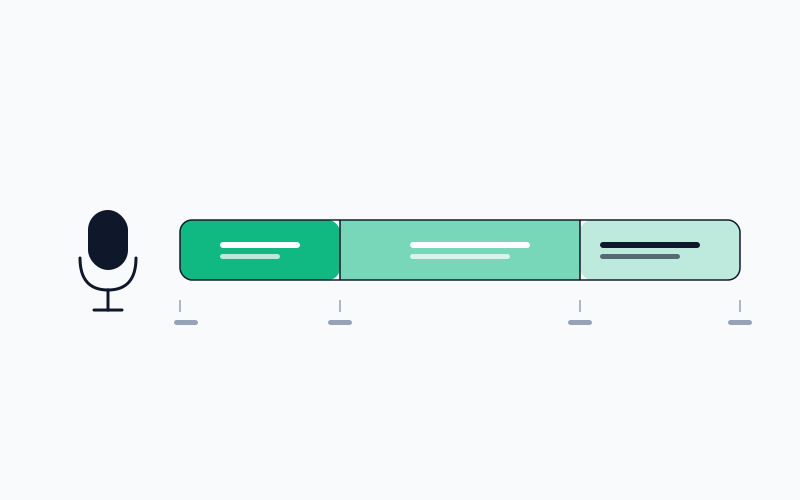
Every interview starts with it. Most candidates answer it badly. Here's the specific structure that gets the interview off on the right foot, with examples.
It's the most-searched interview question on the internet and probably the most consistently fumbled. The interviewer opens with "So, tell me about yourself" (friendly, low-stakes-sounding) and the candidate goes into a two-minute chronological autobiography starting with "I grew up in..." or a defensive "Well, it's all on my resume..." and the rest of the interview now has to recover from a bad opening.
It shouldn't. "Tell me about yourself" is actually the easiest question in the interview because it's the one you have the most control over. You know it's coming. You can write the answer in advance and rehearse it. The reason so many candidates still flunk it is that they've been given bad advice about what it's asking for.
What the interviewer actually wants
Here's the useful reframe. The interviewer already has your resume. They know where you worked. They don't need a 90-second verbal summary of the same information.
What they want (and what every experienced interviewer is listening for) is three things:
- Can this person communicate under low pressure? If you can't handle an open-ended softball, what happens when a real question lands?
- What's their frame on their own career? Which parts do they lead with? What do they think makes them interesting? This reveals self-awareness and priorities.
- Does the story they tell map onto this role? A candidate who answers in a way that makes the role sound like the natural next step is more compelling than one who recites a neutral career history.
A good answer hits all three in under two minutes and leaves the interviewer with a specific hook they can pull on next. That's the whole job.
The three-beat structure
The version that reliably works has three parts: the "past, present, future" pattern, but reframed so that present goes first.
Beat 1: Where you are now (20–30 seconds)
Not where you started. Where you are right now, and what specifically you do.
Weak: "I'm a software engineer." Stronger: "I'm currently a senior engineer on the platform team at Acme, where I own our event-processing pipeline (about 40M daily writes)."
Start with the role and the specific thing you're known for right now. If you've been at your current job for more than a year, lead with a concrete project or outcome. This is the sentence the interviewer will remember; the rest of the answer anchors to it.
Beat 2: The specific thing from your background that shaped this (40–60 seconds)
Now (and only now) you zoom out to one or two elements from your history that explain why you do what you do today. Not a chronological walk. One or two specifics.
Good pattern: "Before this, I spent three years at Widget Co where I led our migration from a monolith to services. That's what pulled me toward distributed systems and eventually this role."
Bad pattern: "Before that I was at Widget Co, and before that I was at an agency, and before that I studied computer science at..."
The difference: the good version has a causal arc. You did X, which taught you Y, which is why you're here. The bad version is a resume read out loud.
If you have an unusual career pattern (a pivot, a gap, an unconventional path), this is where you name it briefly and neutrally. "I spent my first five years in consulting before moving to product. The transition happened because..." One sentence is plenty. Don't over-explain.
Beat 3: What you want to do next (30–40 seconds)
This is the beat nobody uses, and it's the one that differentiates a strong answer from a competent one.
Pattern: "What I'm looking for next is a role where I can own the full infrastructure stack at a company early enough that the decisions haven't been made yet, which is why I was interested when your team reached out."
This does three things simultaneously: it tells them what you want (useful data for them), it tells them why you're interviewing specifically here (flattering and real), and it ends the answer with a natural pivot into their first real question ("Great, let me ask you about that...").
Ending on "next" rather than "past" is the structural move. Most candidates end on "and that's where I am today!" which is anticlimactic. Ending on forward-motion leaves the conversation pointed in a useful direction.
A complete example
Putting the three beats together for a senior PM applying to a Series C B2B SaaS company:
"Right now I'm a senior PM at Widget Corp, where I own our billing platform. Last quarter we shipped usage-based pricing, which is now about 60% of new revenue.
Before this I was at a smaller startup where I got to do a lot of the early product work on pricing and onboarding from scratch. That's what made me love the zero-to-one part of PM work: figuring out what the thing should even be, not just iterating on what already exists.
What I'm looking for next is a role back at a stage where those decisions haven't all been made yet. Your team is building the pricing layer for a new category, and that sounded like exactly the problem I want to be in the middle of for the next few years."
Ninety seconds. Three beats. A specific wedge at the end. The interviewer's next question writes itself: "Tell me about the usage-based pricing work" or "What made the early-stage experience stand out for you?"
What to cut
A few common patterns to avoid:
Don't start with "Well, it's all on my resume..." It reads as defensive and wastes your opening. They know it's on the resume. They're asking because they want to hear you articulate it.
Don't start with childhood or college. Unless you're in a role where your educational background is genuinely load-bearing (you're applying to a PhD-level research role, say), skip ahead to your professional life.
Don't give a complete chronological history. Every job you've had does not need a sentence. Pick one or two that matter for this role and skip the rest.
Don't memorize a 90-second speech word-for-word. Memorized answers sound memorized. Rehearse the beats and the key sentences; let the connective tissue come naturally.
Don't end with "...and that's why I'm here today!" It's a dead end. End with forward motion.
Don't go over two minutes. Ninety seconds is the target. Two minutes is the ceiling. Anything longer and you've overdrawn the interviewer's attention budget in the first question of the interview.
How to tailor the answer per company
The structure stays fixed. What varies is the details you emphasize.
For each company, ask yourself: what specifically about my background maps onto what this role is about? Lead Beat 1 with that specific thing. Use Beat 2 to show how you got there. Use Beat 3 to name why this company is the next step.
If you're applying to a company that values breadth, Beat 2 should show breadth. If they value depth in a specific area, Beat 2 should show that depth. The template doesn't change; the specifics you pick to fill it do.
This is why candidates who apply to 10 similar-sounding jobs can give the same answer to all of them and sound generic, while candidates who apply to 3 specifically-chosen jobs can tailor each answer and sound pointed. The opening answer is where that effort shows up first.
The rehearsal test
Before any interview, write out your three beats and read them out loud. Two tests:
The stopwatch test. Target 90 seconds. If you're over 2 minutes, cut. Most of what you want to cut is Beat 2 (the past), candidates over-invest there.
The friend test. Read it to someone who doesn't know what job you're applying for. Ask them: "What job do you think I'm interviewing for?" If they can't tell, the answer is too generic. Rewrite Beat 3 to make the target role more legible.
Running these two tests on your answer takes ten minutes and is the highest-leverage ten minutes of interview prep you'll do.
The bigger point
Every interview has an opening minute where the interviewer forms an initial read. "Tell me about yourself" is often the entire opening minute. Treating it as the throwaway question it sounds like is the mistake.
Treat it as a prepared answer. Write it. Rehearse it. Tailor it per company. Hit three beats: where you are, one specific thing from your background that shaped that, and what you're looking for next. Keep it to ninety seconds. End on forward motion.
The rest of the interview gets materially easier after a clean opening. And a clean opening is something you can manufacture, unlike most of what happens in an interview.
Common questions
How long should the answer actually be?
Ninety seconds is the target; two minutes is the ceiling. If you're pushing past two minutes, the excess almost always lives in Beat 2 (the past), candidates over-invest in chronology and under-invest in direction. Rehearse with a stopwatch.
Should I mention where I went to college?
Only if it's directly relevant to the role or to the specific pivot you're describing. For most candidates with 3+ years of professional experience, college is noise in this answer. Lead with your current work.
What if my current role isn't impressive?
Lead with scope, not title. "I own the billing and payments surface, 40M events/day" is more interesting than "I'm a senior engineer." If the scope itself isn't inspiring, lead with a specific project you completed that was.
Is it OK to use the same answer for every interview?
Beats 1 and 2 (present + past) stay roughly stable across applications. Beat 3 (what's next) should change per-company: it's where you make the role you're interviewing for feel like the natural next step. A tell of under-preparation is giving the same Beat 3 across companies that obviously want different things.
What if the interviewer interrupts me?
Let them. Interruptions are usually a positive sign: they mean the interviewer is engaged and wants to dig into something specific. Pause cleanly, answer their question, and then either return to your planned answer or move on. Don't insist on finishing the three beats if the conversation has moved.
Is it weird to rehearse this?
No. Everyone rehearses this; the only variable is whether it shows. Over-rehearsed candidates sound robotic because they memorized sentence-for-sentence. Under-rehearsed candidates ramble. The middle is rehearsing the structure and the key sentences, letting the rest come naturally.
For the related question about why you're leaving, see Why Are You Leaving?. For more on interview red flags, see When to Walk Away From an Interview Process.
If you're interviewing at multiple companies and running into this question every time, Jobiz helps keep the prep you've done for each role from evaporating between conversations, so the version you drafted for this company is the version you actually deliver.
No spam. Unsubscribe anytime.
Related Articles
The recruiter screen: what the first call is really checking
The first call is short, but it filters more candidates than any other stage. What the recruiter is listening for, and how to answer the money question.
 Jobiz Team
Your employer made a counter-offer. Should you take it?
A counter-offer fixes the number, rarely the reason you looked. How to weigh one honestly, and how to turn it down without burning the bridge.
Jobiz Team
Take-home assignments: how much unpaid work is too much?
A fair take-home is a few hours, scoped, and reviewed by a person. How to tell a reasonable one from free consulting, and what to say when it isn't.
Jobiz Team